There Is a Trap in the August Calendar
Most people searching for August flights to Fukuoka click on the same week: the one containing August 15. In 2026, Korea's Liberation Day falls on a Saturday, so Monday, August 17 becomes a substitute holiday — a three-day weekend with no vacation days spent. The problem is that Japan's calendar lights up red in exactly the same week. Obon, Japan's biggest homecoming holiday, runs August 13–16, and combined with the Mountain Day holiday on August 11, the entire second week of August functions as Japan's national vacation week. Korea's long weekend and Japan's homecoming rush meet head-on at Hakata Station.
Japanese travel guides consistently estimate Obon-season lodging surcharges at 30–50%. Looking at HotelPing's Fukuoka hotel data, this is normally a city with plenty of ways to sleep cheap. That advantage collapses hardest during the second week of August — and comes back to life the week right after. This guide starts at that fork in the road.
The Short Version
- If you can choose your dates, skip the August 15–17 week and go from August 18 onward. Once Obon and the Korean holiday end, Hakata business-hotel rates drop a full tier. See the timing section.
- First time in Fukuoka? Stay within walking distance of Hakata Station. Hotel Nikko Fukuoka, a five-star property at ~$117 a night in HotelPing's collected rates, is the benchmark; on a tighter budget, Tokyu Stay Hakata at ~$97.
- August in Fukuoka means highs around 33°C (91°F). That is why hotels with onsen baths matter more this season than any other — places like Dormy Inn Hakata Gion, collected in the onsen section.
- The yen now trades at ₩915 per ¥100, down 3.7% from ₩950 a month ago — one more variable lowering the real cost of late-summer Fukuoka.
Table of Contents
- There Is a Trap in the August Calendar
- Why Hotels Matter More in Late-Summer Fukuoka
- Timing: August 18 Is the Dividing Line
- Walking Distance of Hakata Station: The First-Timer's Answer
- Tenjin and Nakasu: The Neighborhoods You See on Your Second Trip
- Season Special: In a Heat Wave, Onsen Hotels Become the Answer
- Price Reality: That Week vs. the Week After
- Honestly: Hotels That Come with Conditions
- FAQ
Why Hotels Matter More in Late-Summer Fukuoka
Daytime highs in August Fukuoka hover around 33°C, and the humidity pushes the feels-like temperature higher. This is a city compact enough to explore on foot — smaller than Tokyo or Osaka — but in this season that advantage gets cut in half. The rhythm becomes: move in the morning, shelter indoors at midday, head back out as the sun drops. Which means you spend more hours in your hotel than in any other season.
So the criteria for choosing a late-summer Fukuoka hotel narrow to two. First, how close is it to a station? In a heat wave, a 5-minute walk and a 15-minute walk are entirely different propositions. The single most repeated phrase in the Fukuoka hotel reviews HotelPing collects is "X minutes on foot from Hakata Station." Second, is there somewhere to wash off and recover? Fukuoka has an unusual concentration of business hotels with natural hot springs or large public baths, and this season's reviews repeat the same pattern: "walked all day, the onsen saved me."
The data says Fukuoka is a city where the gap between price and satisfaction is narrow. Of the 298 Fukuoka hotels that pass HotelPing's screening, the $35–105 range is the thickest band at 120 properties, averaging 8.1 in review scores. The ~$280 tier averages 8.7 — prices quadruple while scores rise by 0.6. That is not an argument against expensive hotels; it means the floor for mid-range hotels here is high. In a season when prices swing, that fact matters more.
For what it's worth: of the ten most-viewed Fukuoka properties on HotelPing this week, not one is a luxury hotel. They are small and mid-size properties in the backstreets of Nakasu, Gofukumachi, and Yakuin. A snapshot of what late-summer travelers are actually hunting for.
Timing: August 18 Is the Dividing Line
Here is the structure of August 2026, date by date.
| Window | What happens | Hotel rates |
|---|---|---|
| Aug 1–7 | Japanese summer-vacation high season | High |
| Aug 8–12 | Mountain Day (8/11) long weekend, Obon begins | Higher |
| Aug 13–17 | Obon (13–16) + Korean holiday weekend (15–17) | Peak of the year |
| Aug 18–31 | Obon ends, Japanese schools resume | Down a full tier |
Japanese travel sites put Hakata/Tenjin business-hotel rates at ¥25,000–40,000 (about $170–275) a night during the Obon-plus-holiday week, versus ¥15,000–22,000 (about $100–150) in late August. Same room, one week later, roughly $70 cheaper. HotelPing's collected rates point the same direction: Hakata three-star hotels captured on peak August dates are selling in the $140–280 range, while this city's normal mid-range sits at about half that.
Currency is this summer's second variable. Per HotelPing's exchange-rate data, ¥100 traded at ₩915 on July 20, down 3.7% from ₩950 a month earlier, and below the 90-day mark (₩924) too. On a ¥20,000 room, the exchange move alone shaves off around $5. Not huge — but stacked on top of the post-Obon rate drop, it compounds.
One variable deserves caution: typhoons. Northern Kyushu averages 1.5 typhoon approaches in August and 1.7 in September — the two highest months of the year. So the rule for late-summer Fukuoka is to book refundable rates. Save $7–14 on a non-refundable rate, land in a typhoon's path, and you lose ten times the difference.
To sum up: if your dates are flexible, aim for August 18 or later — August 18–25 is the sweet spot balancing rates and weather risk. If you are locked into the holiday weekend, go that week but book proven hotels early. You could also consider other cities like Osaka or Kyoto, though Obon is a nationwide event — that week is expensive everywhere in Japan. Osaka hotels → Kyoto hotels →
Walking Distance of Hakata Station: The First-Timer's Answer

If this is your first Fukuoka, don't overthink it: stay within walking distance of Hakata Station. It is two subway stops from the airport, and every train and bus to Yufuin and Beppu departs from here. In a heat wave, that access is stamina.
The benchmark is Hotel Nikko Fukuoka (★8.9 | 15,330 reviews | ~$117/night). It is a five-star property that, per HotelPing's collected rates, sells for less than many of Hakata's newer three-star builds. The recurring lines in its reviews: "connected underground to Hakata Station" and "rooms are spacious by Japanese standards." Cross-check the platforms and the scores line up — 8.9 on Agoda, 9.4 on Trip.com, 9.2 on Expedia. Five-stars with this level of cross-platform agreement at this price are rare.
If you can spend more, Mitsui Garden Hotel Fukuoka Gion (★8.9 | 17,610 reviews | ~$310/night) is Hakata's upper pick. There is an open-air onsen on the 13th floor, and review after review notes that Hakata, Canal City, and Tenjin are all walkable. A Korean YouTube room tour of this hotel is literally titled "An open-air onsen in the middle of the city?" One caveat: peak-season collected rates have climbed past $300, so this is exactly the hotel whose value comes back once you dodge the Obon week.

For an anniversary trip, it's Miyako Hotel Hakata (★9.2 | 15,907 reviews | ~$345/night). Among Fukuoka hotels with over 10,000 reviews it holds the top Agoda score, and its couples-only score runs up to 9.5. Booking.com 9.1, Trip.com 9.5, Expedia 9.6 — nine-plus on every platform. Many hotels have one platform where the score is inflated; Miyako doesn't.
Going cheaper splits two ways. Tokyu Stay Hakata (★8.7 | 8,651 reviews | ~$97/night) has washer-dryers and microwaves inside the rooms. In an August where sweat-soaked clothes pile up daily, no explanation needed. Trip.com 9.0 (1,763 reviews) and Expedia 9.0 back it up externally. Per reviews it is about a 10-minute walk to Hakata Station — not right at the station, know that going in.
To spend even less, there is The Lang Hotel (★9.0 | 594 reviews | ~$48/night), a new unmanned hotel that Korean reviewers describe as the affordable option when everything near Hakata Station is expensive. The trade-off: no staff on site, check-in via QR code and email. One review describes standing at the door struggling without mobile data. The pros and cons are sharp, so it appears again in the warnings section. If a hostel works for you, montan HAKATA (★9.1 | 16,420 reviews | ~$124/night) is there too — its top review keywords are "free breakfast" (27 mentions) and "walk from Hakata Station" (25).
Eating is not a problem in this neighborhood. Ganso Motsunabe Rakutenchi by Hakata Station (Google ★4.8 | 21,222 reviews) is one of the most-reviewed motsunabe restaurants in the entire city, walkable from the Nikko or Tokyu Stay. Hot-pot in a heat wave sounds wrong — eating motsunabe under air conditioning is precisely this city's summer style.

If the Hakata-versus-Tenjin question itself is your dilemma, read Fukuoka: Hakata vs. Tenjin 2026, which compares the two districts across 526 hotels.
Tenjin and Nakasu: The Neighborhoods You See on Your Second Trip

From your second Fukuoka trip onward, Tenjin comes into view. It is the city's shopping and dining hub, and since 2025 it has been the district drawing a wave of new hotel construction, ONE FUKUOKA among them. A construction wave means supply growth — a friendly medium-term signal for Tenjin room rates.
The benchmark here is Hotel Monte Hermana Fukuoka (★8.7 | 17,430 reviews | ~$117/night). One of the most-reviewed hotels in the city, backed externally by Trip.com 9.0 (1,655 reviews) and Expedia 8.8. Its one flaw is the roughly 10-minute walk to Tenjin's main drag — and the recurring twist in reviews is that those 10 minutes of backstreets are packed with good restaurants: the unagi place next door, the hamburg-steak spot 8 minutes away, the coffee shop across the street all get named.
To go cheaper, Fukuoka Toei Hotel (★8.4 | 14,437 reviews | ~$52/night). It sits near Yakuin Station between two subway lines — "five minutes to either station," as the reviews put it. With a solo-traveler score sample above 3,800, it is a proven quiet base for traveling alone. Yakiniku restaurant Karubitei (Google ★4.9 | 317 reviews) is nearby.
On the Nakasu side, Hotel Vista Fukuoka Nakasu-Kawabata (★8.9 | 9,099 reviews | ~$172/night) is the quiet contender. Its Expedia score, 9.2 (525 reviews), runs higher than its Agoda score — a pattern that usually reads as especially high satisfaction among Western travelers. The Nakasu yatai (food stall) street is a stroll away, and the unagi institution Unagi no Eito (Google ★4.9 | 6,876 reviews) is in the same Nakasu quarter. Evening plans write themselves at this location.

One step more local is Cross Life Hakata Yanagibashi (★8.6 | 12,267 reviews | ~$276/night), next to Yanagibashi Market — "Fukuoka's kitchen." It is the rare hotel whose reviews include long-stay lines like "the market and supermarket are right there, easy to self-cater." The mizutaki restaurant Hakata Mizutaki Hiro (Google ★4.9) is close by. That said, with peak-season collected rates in the high-$200s right now, there is no rush. This hotel shows its true value after rates come down.
Season Special: In a Heat Wave, Onsen Hotels Become the Answer

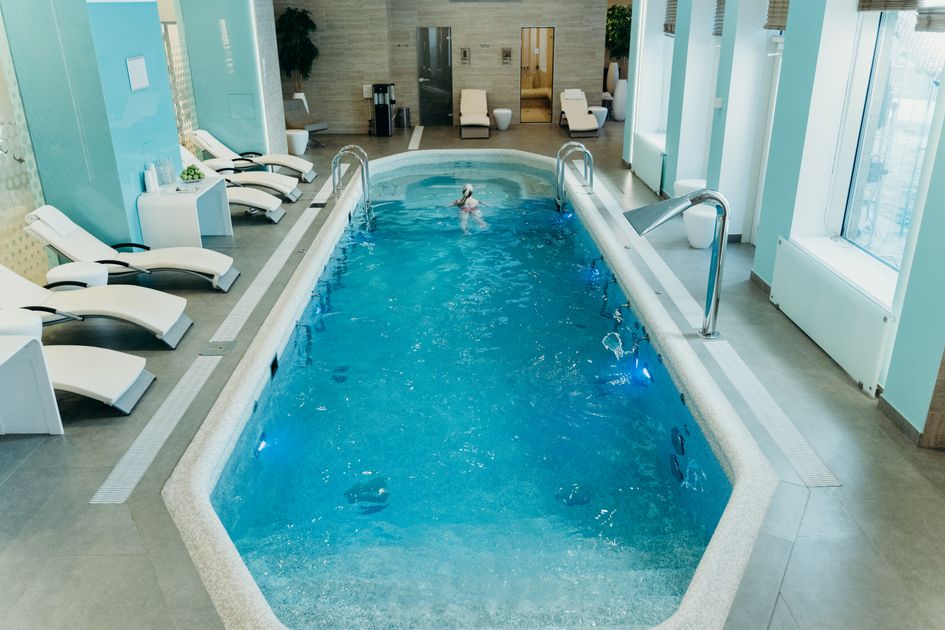
Fukuoka business hotels have a hidden weapon: onsen baths. Facilities that are luxury-hotel territory in other cities come attached to $70–140 hotels here. And in August, they stop being an amenity and become core infrastructure — walking in from 33°C streets and sinking into an onsen is how a day gets reset.
The category leader is Dormy Inn Hakata Gion Natural Hot Spring (★8.7 | 12,134 reviews | ~$152/night): a natural hot spring, plus the Dormy chain's signature free late-night ramen (yonaki-soba) and free post-bath ice cream, both recurring fixtures in reviews. A Korean YouTube review of this hotel is titled "If onsen is your priority, this is non-negotiable." Over by Canal City sits its sibling, Dormy Inn Premium Hakata Canal City Mae (★8.7 | 11,627 reviews | ~$131/night), where family reviews mention Korean- and English-speaking staff and the MaxValu supermarket next door.
To pair station access with an onsen, it's Nishitetsu Hotel Croom Hakata (★8.8 | 14,515 reviews | ~$172/night) — steps from Hakata Station and the bus center, with an onsen on the ground floor, and enough solo-travel demand that a Korean solo YouTuber has a full review video. On a smaller budget, Yaoji Hakata Hotel (★8.5 | 11,926 reviews | ~$103/night) is the discount version of the same formula. One review sums up the hotel's identity: "unlimited onsen bath access — I went every time I wanted to wash up."
Instead of ending the day at an onsen, you can also ship the whole day out of town. Among the Klook products HotelPing tracks, a day tour combining the Yufuin no Mori sightseeing train, Yufuin village and Dazaifu runs about $44 per person with 3,500+ reviews; a Takachiho Gorge day tour sits at the same price with 3,800+ reviews. Highlands and gorges are reliably cooler than the city. The data-backed formula for a heat-wave Fukuoka trip: half city, half day-trips.
Price Reality: That Week vs. the Week After
Here are Fukuoka's key hotels in one table, at HotelPing's July 20 collected rates. These rates reflect peak-season dates and run higher than usual — which conveniently reveals which hotels hold their price even in peak season.
| Hotel | Agoda | Other OTA | Collected rate | Nearby food | Verdict |
|---|---|---|---|---|---|
| Hotel Nikko Fukuoka | ★8.9 | Trip.com ★9.4 | ~$117 | Rakutenchi walkable | A five-star at this rate in peak season is the benchmark |
| Tokyu Stay Hakata | ★8.7 | Trip.com ★9.0 | ~$97 | Rakutenchi walkable | In-room washer; first pick for summer long stays |
| Hotel Monte Hermana Fukuoka | ★8.7 | Trip.com ★9.0 | ~$117 | Backstreet gems | The safe mid-range pick in Tenjin |
| Fukuoka Toei Hotel | ★8.4 | Trip.com ★8.8 | ~$52 | Karubitei on foot | Best peak-season efficiency for solo travelers |
| Yaoji Hakata Hotel | ★8.5 | Trip.com ★8.8 | ~$103 | Station-front eateries | Unlimited onsen at this price is an anomaly |
| Mitsui Garden Hotel Fukuoka Gion | ★8.9 | Trip.com ★9.1 | ~$310 | Hareruya on foot | Even pricing in the rooftop onsen, too much for Obon week |
| The Lively Fukuoka Hakata | ★8.3 | Booking ★7.5 | ~$207 | Unagi no Eito | The Booking score is closer to the truth — see below |
Three things to read from this table. First, the Nikko and the Mitsui Garden Gion carry the same 8.9 Agoda score, at a 2.6x price gap. Whether the rooftop onsen and new-build polish are worth the difference is a matter of taste — in the data, the satisfaction difference is zero. Second, Trip.com scores run consistently above Agoda here, which marks Fukuoka as a city where Asian travelers report especially high satisfaction. Third, plug in late-August rates (¥15,000–22,000, roughly $100–150 by outside market surveys) and most mid-range hotels in this table drop a tier. The same budget that buys the Toei during Obon week buys the Monte Hermana the week after.
For choosing the booking site itself, the principles in Busan Hotel Booking Guide 2026: Pick the Booking Site Before the Hotel apply to Fukuoka unchanged. In short: the same hotel carries different prices and cancellation terms per OTA, so compare at least two — and in typhoon season, refundable rates come first.
Honestly: Hotels That Come with Conditions

The Lively Fukuoka Hakata (★8.3 | 13,978 reviews | ~$207/night) is the most Instagram-visible hotel in Fukuoka. The platform scores split, though: 8.3 on Agoda, 7.5 on Booking.com across 3,017 reviews. A 0.8-point gap on three thousand reviews is not noise. A Korean YouTube review of this hotel is titled "Warning: only the exterior is pretty," and Agoda reviews include the phrase "not what the reviews promised." The free beer hour and the location are genuine strengths. Lower your photo-based expectations one notch and you can leave satisfied — this is not a hotel to choose from pictures.
Canal City Fukuoka Washington Hotel (★8.0 | 13,440 reviews | ~$145/night) is a hotel that is entirely about location. Sitting right beside the Canal City complex — fountain shows, malls, and food courts a few steps away with kids in tow — is a real weapon for family trips. Its Booking.com score, though, drops to 7.2 (2,613 reviews), with recurring disappointment about aging facilities and cleanliness. Chosen for the kid logistics, it is a defensible trade; booked for the hotel itself, it disappoints.
The Lang Hotel was introduced above as a value pick, so let's restate the conditions clearly. There is no staff. Reviews note towel changes and trash collection are not standard. Check-in runs on QR codes and emailed door codes, and one recent review (scored 4.4) complains about room size. For travelers fluent in digital check-in and packing light, $48 is a blessing; for travelers expecting service, it is stress.
One last seasonal trap. In August Fukuoka, the "15 minutes from the station but cheaper" hotel is much farther than the map suggests. Fifteen minutes at 33°C equals thirty in spring or autumn. In this season more than any other, saving $14 by adding walking distance is the choice that most reliably turns into regret.
Curious about a Japanese summer market where price and ratings move in opposite directions? Read Okinawa Hotel Guide 2026: The Strange Island Where Ratings Fall as Rates Rise — the structural opposite of Fukuoka.
This guide was produced by HotelPing by cross-referencing price, rating, and review data from five booking platforms — Agoda, Booking.com, Trip.com, Expedia, and Rakuten — plus Google restaurant ratings and YouTube review videos, as of July 20, 2026. Fukuoka hotels →
FAQ
Q. Why are Fukuoka hotels expensive during Korea's August 2026 holiday weekend?
Liberation Day (Sat, Aug 15) generates a substitute holiday (Mon, Aug 17), creating a three-day weekend that lands exactly on Japan's Obon holiday (Aug 13–16). Korean travel demand and Japanese homecoming demand compete for the same rooms that week, pushing Hakata/Tenjin business-hotel rates to ¥25,000–40,000 a night — roughly 1.5–2x normal.
Q. When is the cheapest time to visit Fukuoka in August?
From August 18. Once Obon and the Korean holiday end simultaneously, rates settle into the ¥15,000–22,000 band. August 18–25 is the balance point between price and weather risk; note that September's typhoon approach frequency (1.7 on average) actually runs higher than August's.
Q. Hakata or Tenjin for a late-summer stay?
Hakata if it is your first visit or you have day trips (Yufuin, Dazaifu) planned — airport access, trains, and buses all center on Hakata Station, and minimizing transit is stamina in a heat wave. Tenjin for a shopping-and-dining stay. The full comparison is in the Hakata vs. Tenjin guide.
Q. What if a typhoon hits Fukuoka in August?
Northern Kyushu sees the year's highest typhoon frequency in August–September, so the only real defense is at booking time: choose refundable rates and align hotel and flight cancellation deadlines to 2–3 days before departure. The premium over non-refundable rates is usually $7–14 a night — in typhoon season, that difference is insurance.
Q. Is there a Fukuoka hotel with an onsen bath under about $105?
Yes. Yaoji Hakata Hotel is the flagship example at ~$103 a night in HotelPing's collected rates, with unlimited onsen bath access. Once rates fall in late August, Dormy Inn properties also dip into this range at times.
Q. Where should a solo traveler stay in late-summer Fukuoka?
On a tight budget, Fukuoka Toei Hotel (~$52/night, solo-score sample above 3,800). For atmosphere, the hostel-style montan HAKATA (★9.1). Both carry solo-travel reviews in the thousands.